Summer of Math Exposition
Presented by  3blue1brown
Archive
Rank 51
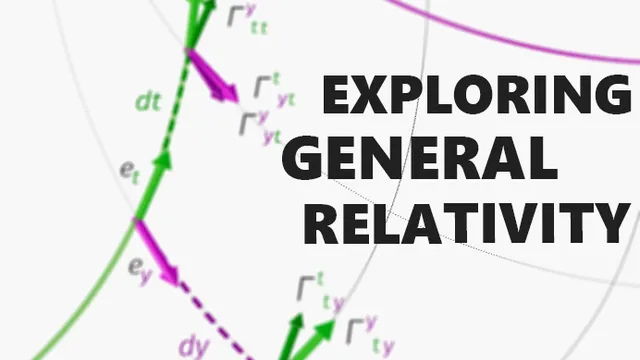
Exploring General Relativity
In this article I introduce you to the basics of general relativity. To understand one of its core equations, the geodesic equation, and one of its core concepts, the metric, the essential mathematical concepts are explained. Each of them is illustrated by an interactive 3D interaction that evolves as you scroll through the page. If you can please use a desktop computer rather than a mobile phone. Have fun and thanks for reading :)
Rank 52
Need help to solve logical problems, Human?
A basic introduction, as well as my learning notes, of definition of boolean satisfiability problems and their solving algorithms. Some interactions are involved, but not much. Be happy to choose a reading path for yourself!
Rank 53
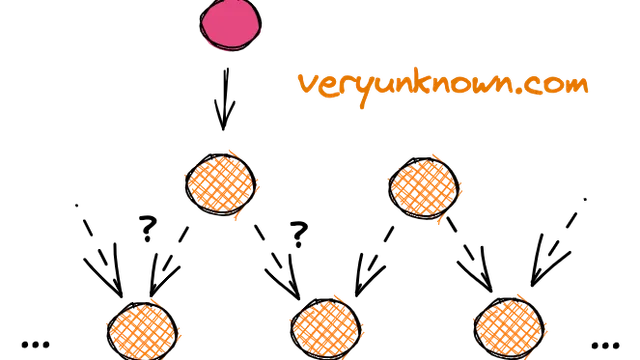
Understanding Generative AI as Galton Board
Understanding Generative AI as Square Galton Board Tower of Babel focusing on mathematical ideas. No prerequisite knowledge required.
Rank 54
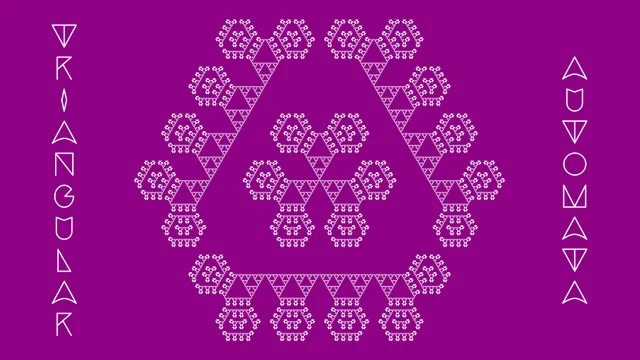
Triangular Automata
I’m a freshly graduated physics student from France, interested in complex systems. This website presents the fruits of the research on cellular automata I decided to pursue autonomously during my summer. Most of it is new and original. I made a website because these results benefit greatly from being explored interactively. I think it is quite well suited for SoME3, so here it is. I hope you will like it! Enjoy your day. Paul
Rank 55
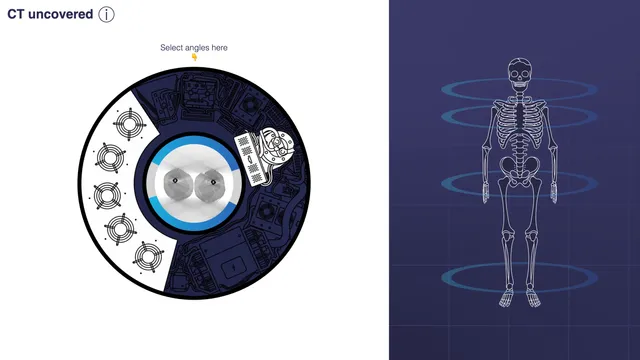
CT-Uncovered
CT-Uncovered is a 2-minute interactive journey where you can explore how image reconstruction in a CT scanner works.
Rank 56
Audible numbers
I am making an interactive essay that explains the numerical ratios that underpin musical notes, scales and chords.
Rank 57
How to measure a circle
You can measure the diameter of a circle by measuring chords (no need to align across the middle of the circle) and doing calculations. Here, I describe the method to do so, and the derivation behind it.
Rank 58
Magical orbs, mathematical inquiry and the magician.
If I tell you that I see a finite set of points, which are characterized by a special propriety; each line that joins two points of this set will inevitably reach another point of this set. What do I see? Are these points co-linear? well, if they WERE co-linear, this propriety WOULD be satisfied. but how could you be certain that this is the only positioning that would assemble such propriety? What I learned solving this is how to turn intuition and what seems "obvious" into a rigorous argument.
Rank 59
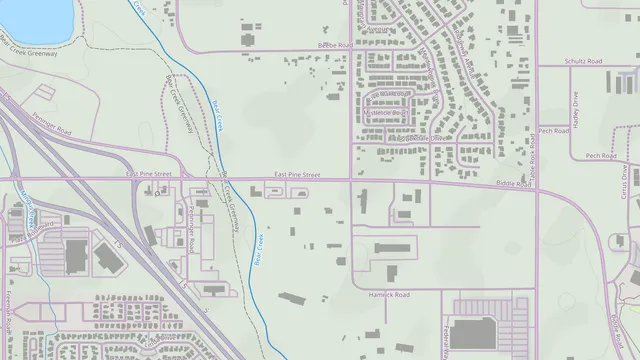
Where are the big roofs for Solar?
Where are the big roofs for Solar? A mathematical look at pulling data from OpenStreetMap with Python code.
Rank 60
The Metric System on Goldilocks Earth.
Scuba divers know that the pressure experienced at depths increases by one atmosphere every 10 meters down. That’s just serendipitous; an easy conversion that isn’t actually part of the metric system and is due to specific physical properties of Earth that are “just right”. It didn't have to be this way; these "spark joy" for physicists.
Rank 61
How to programmatically touch grass
In this interactive article, we will explore one way to generate plants procedurally, learning common problem-solving techniques for open-handed tasks. There are no particular requirements to enjoy this interaction-based experience.
Rank 62
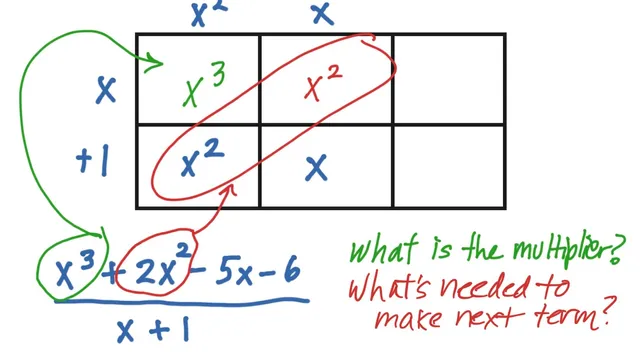
Area Arrangements
See how an Area Model can help your students tackle some challenging math topics: polynomial multiplication, long division, simplifying radicals, and completing the square.
Rank 63
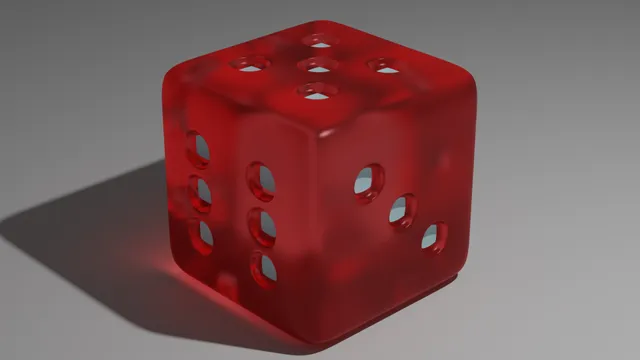
Dice and Calculators and Simplex numbers
A short journey on discovering an exact formula for the odds of rolling dice
Rank 64
The Split-Void Numbers
A C# implementation of the Split-Void numbers, a number system in which division by zero is allowed.
Rank 65
FRACTRAN
FRACTRAN is an esoteric programming language created by John Conway. This interactive will guide you through a series of programming problems to teach you how to program in FRACTRAN and hopefully convince you that the language is Turing complete. Early levels require only basic math problem solving, the last few levels require familiarity with theory of computation topics such as automata theory and Turing machines.
Rank 66
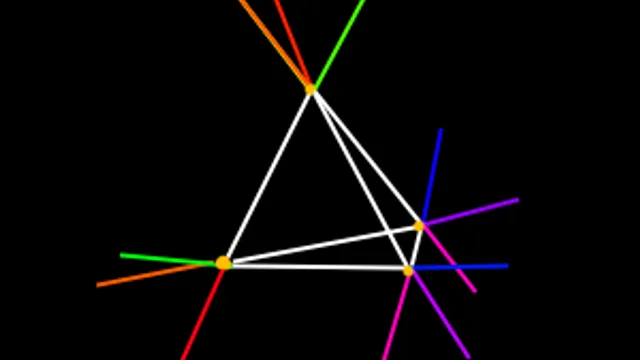
How do you cut it?
This website aims to find the answer to the generalized circle cutting problem: N dimensions, k cuts, maximum number of pieces? The website slowly builds the intuition toward the final solution by introducing geometric and counting solutions for 2D and 3D.
Rank 67
Interpretation of the Eigenvalues of the Hessian Matrix
Identifying a stable point as a maximum, minimum, or saddle point in a multivariable case. Visualizing the eigenvalues and eigenvectors of the Hessian matrix.
Rank 68
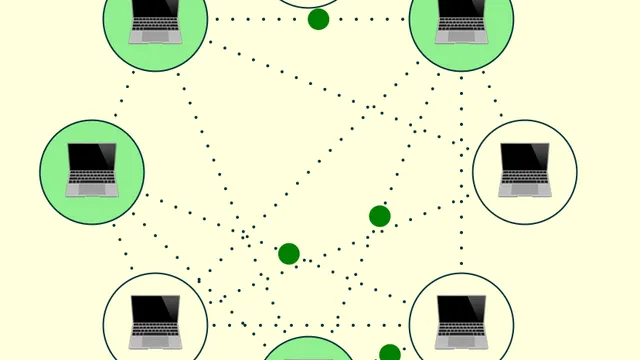
Spreading Gossip on The Web: Algorithms for Distributed Systems
Randomized gossip algorithms are commonly used for sharing information in distributed computer systems. Despite being used in production systems for almost four decades, tight bounds on the performance of these algorithms are still being revised. I analyze the performance of randomized gossip algorithms on several different graphs and provide a simplified proof for the expected and right-tail performance of the algorithm.
Rank 69
How LaTeX plots edges
Short example of how impactful a nice parameter configuration can be.
Rank 70
Finding the Equation for the Volume of a Sphere
This lesson is meant to introduce kids to the equation for the volume of a sphere, via discovery methods. It also serves to get them thinking intuitively about limits (in the context of integrals), many years before calculus would normally be introduced.
Rank 71
How to Discover Generating Functions
An exploration into how you might discover generating functions in an intuitive way. We felt that they are often presented in a way that doesn't lend itself well to understanding where they come from. This blog aims to give a different approach using linear algebra.
Rank 72
Fmath: Fast Float math
A package for Python for faster math on floats using IEEE 754 "mathematical properties". I started this project before I saw the post about SOME so it's not very explanatory at the moment, so you should already know about IEEE 754, C and Python to understand how it works...
Rank 73
Why 24 - String Theory? String Practice!
Discovering the beauty of twine string by observing natural patterns. Starting with making cordage from natural fibers, we continue our research using crochet models to end up making discoveries about these intriguing surfaces.
Rank 74
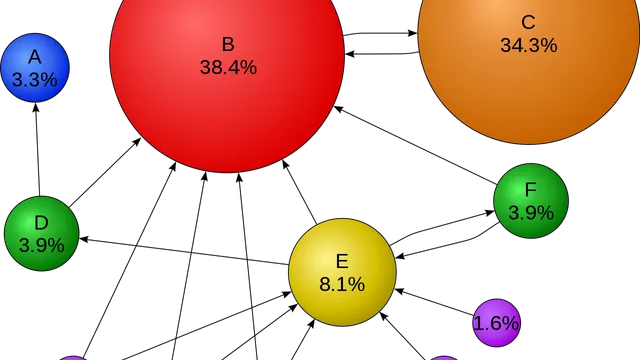
Big Ideas in Applied Math: Markov Chains
This blog post explains the basics of Markov chains and why they're useful.
Rank 75
Learn to Nim
In this interactive lesson, learn about the strategy of the game of Nim. Along the way, you will learn about the principles of combinatorial game theory, and come to a surprising conclusion about the usefulness of Nim in seemingly unrelated games.
Rank 76

Introduction into the Basics of Information Theory
Series on the basics of classic info. theory (C. Shannon's sender-receiver model, stat. thermodyn. (bits/entropy), Markov chains, language as a stochastic process). The series is part of a student journal project (Berlin Exchange Medicine) and is supposed to provide basic knowledge for a better access to advanced methods applied in, e.g., comp. neuroscience. Mathematically it mostly covers/replicates the first 12-13 pages of "A mathematical theory of communication" by C. Shannon.
Rank 77
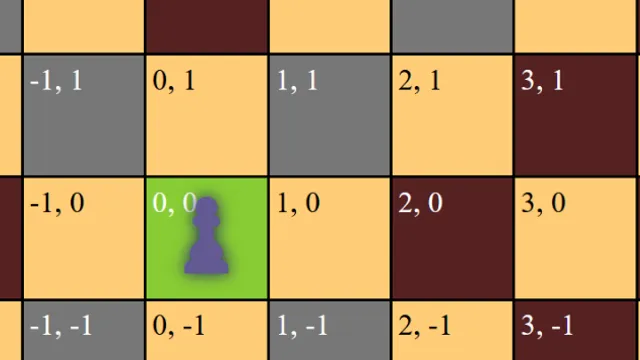
Colorbindings of Chess Variant Pieces
In chess, neither pawns nor bishops can reach all the squares on the board, and are restricted to a smaller subset of squares - a so-called "colorbinding." Here, we ask: can we classify all the ways that a chess piece (whether that's a piece from ordinary Western chess, a piece from other related chesses like xiangqi and shōgi, or a similar but newly-made-up piece) can be colorbound?
Rank 78
Hacking Numbers
This essay explores the correspondence between configuration spaces, algebraic data types, and positional number systems, covering a lot of ground while assuming very little prior knowledge in any one area. Then we explore the geometry undergirding the various kinds of positional number systems, a cone of continuous moduli, and demonstrate how a deeper understanding of this space may be translated across our correspondence.
Rank 79
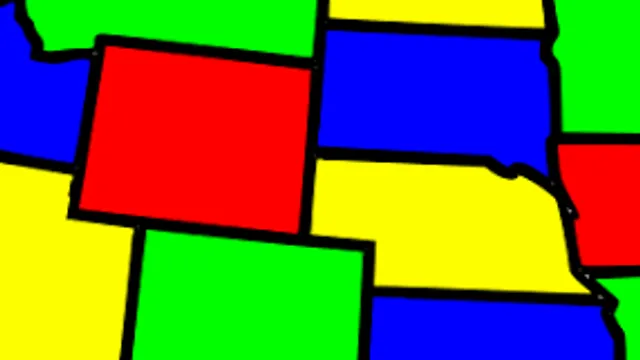
Induction on Graphs: Reducible Configurations
This post explains how theorems are often proved by induction in graph theory. It concludes with a fully generalized description of induction.
Rank 80
What is the Curve whose Points Bisect the Tangent Segment?
This blog post is a walk-through on a seemingly geometry-related question that exposes (high school) students about a type of differential equation.
Rank 81
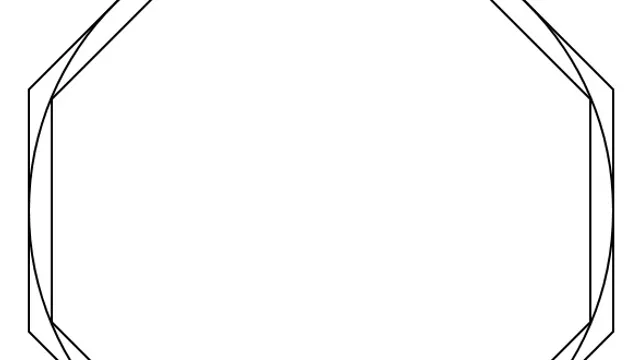
On a Blunder of Millennia
On the use of the Pythagorean theorem to solve for pi with exactitude as well as the application of the isoperimetric inequality to Archimedes' method of exhaustion.
Rank 82
Function...ing well
I have designed a website dedicated to the graphic representation of functions and mainly parabolas. Throughout the website, we can discover a unique way of designing curves by approximating them. As soon as we make sure that some of those curves can be defined as functions, we take a deeper look at a bunch of their hidden properties, as well as some interesting uses in our daily lives. It doesn’t require any deep mathematical knowledge, just curious readers who are enthusiastic about learning.
Rank 83
The Parable of the Muffins
I work through one of the arguments that quantum mechanics has no room for local hidden variables, the Greenberger-Horne-Zeilinger-Mermin thought experiment, using baked goods.
Rank 84
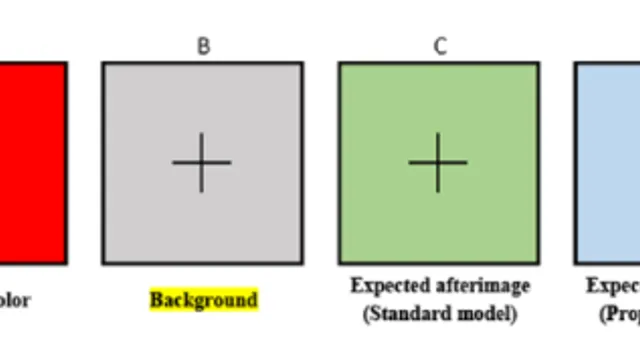
After image
The afterimages effect is a phenomenon that occurs when an image is displayed for a short time and then disappears, leaving a complementary color in the viewer's mind.
Rank 85
Desmos Dissections: Fellowship of Areas
We illustrate techniques of Geometric Dissection using a child's jigsaw pieces (Chinese Tans). They are, in every sense, our Toy model.
Rank 86
Who shuffled these?
This blog starts with the premise of 'how can I evaluate if a method is shuffling is good enough?'. The deck used is from the boardgame Ticket to Ride, due to its more simple structure, and we look at two methods: riffle and pile shuffling. We visualize the patterns that arise while shuffling, we quantify the randomness in those patterns, and at the end, we reach a definitive conclusion on which of those methods is better than the other, and why.
Rank 87
Physics Does Cartwheels: The Power of Abstract Spaces
I demonstrate the power of switching perspective to abstract spaces by comparing a purely calculus-based solution of a physics problem with a slick geometric proof. The latter has underlying connections to the seemingly unrelated brachistochrone problem.
Rank 88

A Study In Greyscale
Join Sherlock Holmes and Dr. Watson on the chessboard honing the logical faculties Holmes prizes so highly. In this 221B spinoff, we explore the combinatoric aspect of the chessboard - music by Chopin now included! We've taken the liberty to extend the board from 8x8 to nxn... and beyond! There are five main problems explained in Holmes' lucid style, easy enough for Dr. Watson to follow. We've also included bonus problems that aren't a part of the main submission
Rank 89
Partial Fraction Trick with Complex Analysis
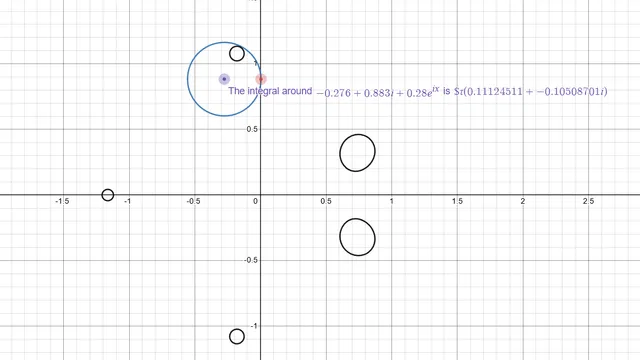
At this point this is more or less an introduction into complex analysis using a simple example to show how useful the techniques of complex analysis are. Basic calculus knowledge is required, some linear algebra, multivariable calc, and familiarity with complex number is probably helpful.
Rank 90
Boltzmann Waiting at a Bus Stop
Busses don't always arrive on time. Finding the appropriate distribution to describe the amount of time spent waiting for a bus seems trivial but is actually quite difficult to pin down. In this post, we explore the principle of maximum entropy and show how it pops up in this deceptively simple sounding problem. This concrete settings serves as an example of an extremely powerful technique for statistical inference, with uses in virtually every scientific field.
Rank 91

Solving an Unsolved Problem in Knot Theory
A full script for an as of yet unmade video in which I not only explain the fundamentals of knot theory, but explain what I believe to be a novel solution to an open problem in knot theory. I apologise in advance if the script is too dense or vague, as it was intended to be accompanied by visuals.
Rank 92
The Hidden Universes of the Compactness Theorem
A look at how the abstract Compactness Theorem in logic can apply itself to many areas of math to simplify lots of otherwise hard results (especially to do with infinity). Article explores applications, where its name comes from, as well as a proof at the end.
Rank 93
Guided Relativity
In this short demo, Generative Einstein will provide a glimpse into his thoughts on special relativity.
Rank 94
Intuitive Eulers Formula
A grounded approach to understanding Euler's formula by preferring explicit computations.
Rank 95
Function Transformations: A New Perspective
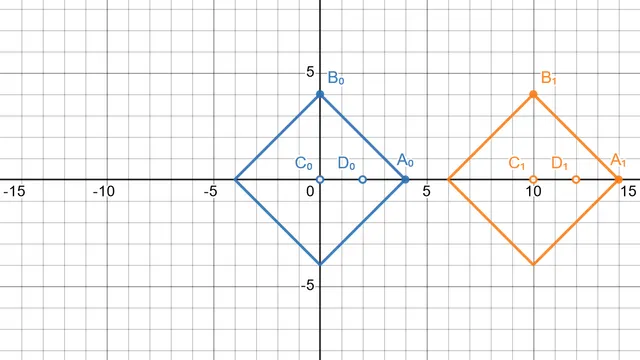
Why is y = (x - 3)² to the RIGHT of y = x²? There's a lot of different ways to explain this, but the way I prefer to explain it doesn't seem all that common on the internet. In my entry for SoME3, I provide a explanation that revolves around the relationship between a pre-transformation point and a post-transformation point. I then show how you could use this thinking to tackle two standard types of function transformation math problems.
Rank 96
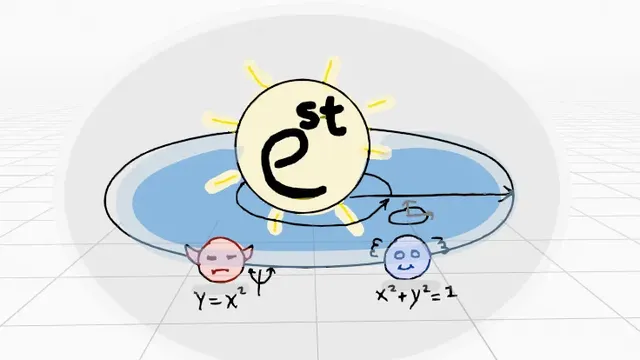
The Language of the Mechanical Universe
How could we understand the universe in such a way we could predict the future knowing the past and the present? Let me introduce you to that language. Using Laplace's transform to model systems (only ODEs) and solve them with no more than algebra. Learn why it works, and how it offers a framework or language to understand assembled systems such as the Mechanical Universe.
Rank 97
Möller–Trumbore
An in-depth exploration/discovery of the Möller–Trumbore algorithm.
Rank 98
Hint the Hidden Heirloom
A magic trick where the assistant need to flip 1 bit to hint the magician to the correct binary number.
Rank 99
a visual exploration of raycasting
A short visual post about the raycasting approach to rendering worlds
Rank 100
Exact Circumference of an Ellipse: Equation and Mathematical Reasoning
This paper presents a compelling case that the exact equation for the circumference of an ellipse is π × √(a2 + b2) × 2 . This case is supported by various types of mathematical reasoning. That mathematical reasoning includes geometric analysis and empirical examples. An exact equation for the circumference of an ellipse has implications across disciplines where ellipses are encountered. The goal of the paper is to provide a clearer understanding of an ellipse’s circumference in accessible terms