Summer of Math Exposition
Presented by  3blue1brown
Archive
Rank 168
Fun with mods and bases
A look at the slightly odd behavior of numbers raised to powers in different integer bases.
Rank 169
Math behind shaders - Depth, Edge and Toon shading in Godot
I’m learning how math shows up in shaders, and it’s actually really cool. In this video I try out depth maps, Sobel edge detection, and toon shading in Godot. It’s crazy how just a bit of math can turn into outlines and cartoon-style effects.
Rank 170
Collatz Conjecture Walk-through
The Collatz Conjecture is one of the simplest problems to state in all of mathematics: take any whole number, and if it’s even, divide by 2; if it’s odd, multiply by 3 and add 1. Repeat. The conjecture says that no matter what number you start with, eventually the sequence reaches 1. Despite its simplicity, the problem has remained unsolved for nearly a century.
What makes Collatz so mysterious is the mix of two different rules — halving steps versus the “3x + 1” step — which creates irregular, chaotic-looking orbits. In this video, I present a way of collapsing Collatz into a single-rule function:
f(x) = 3x + 2ⁿ, where 2ⁿ is the largest power of 2 dividing x.
This approach folds the halving steps back into the triple step, treating them as part of a unified successor process along the 2-adic ring. In effect, each prime power of two acts as a successor modulator in a base-2 system. By doing so, the halving steps no longer branch into separate paths — instead, they align along the power-of-two axis, forming the structural backbone of the network.
Through this lens, the usual “branching” Collatz tree undergoes an inversion: rather than chaotic bifurcation, the system exhibits convergence toward the 2-adic modular axis. This reframes the dynamics as a kind of gravitational collapse, where exponential decay replaces exponential branching.
The key equivalence is that completing one cycle of “halving steps + 3x + 1” is algebraically the same as applying “3x + 2ⁿ” in a single move. This unification transforms Collatz into a deterministic sieve, where all orbits compress and converge toward the powers of two.
----------Abstract----------
In this video, I present a way of collapsing Collatz into a single rule function:
f(x)=3x+2ⁿ
where, 2ⁿ ∣ x and 2ⁿ⁺¹∤ x
(2ⁿ is the largest 2ⁿ that divides x.
This approach folds the halving steps back into the triple step as a unit successor modulator along the 2-adic ring by taking advantage of the smallest prime factor, 2ⁿ, and its position as the next successor to 1 and 3 so that, at each iterative step, x's prime factor, 2ⁿ, can be used as a successor modulator in a counting system of base log 2. This returns continuity to the network, eliminating bifurcation of branches and the fractalization of halving steps because the trivial cycle undergoes coordinate inversion becoming a hyperbolic "Penrose-boundary" represented by the power of 2 axis,—or 2-adic ring— the building blocks of which are all the halving steps. The inversion of the network combined with the elimination of halving steps also inverts the growth through bifurcation to a decay through convergence and changes the order from an exponential decay 'rate' to exponential decay resembling a gravitational collapse toward the modular boundary. So, instead of alternating between two different processes, we can see Collatz as one consistent successor function. This reveals an algebraic equivalence: completing a single rotation of halving and then applying “3x+1” is the same as applying “3x+2ⁿ” directly. This becomes a deterministic sieve as the branches/orbits of the Collatz tree converge to a single modular axis at 2ⁿ.
https://doi.org/10.5281/zenodo.16733351
https://doi.org/10.5281/zenodo.16819899
Rank 171
Explaining GCSE compound Interest in FORTNITE
I attempt to innovate the education system by explaining compound interest in fortnite.
Rank 172
Probabilistic Method- where math meets minds
Hey guys, I hope you find this video useful in a fun, intresting and fascinating way. Please let me know your feedback. Keep learning, keep growing.
Rank 173
Sums and Infinities
This video is regarding multiple content regarding infinities, summations and set theory, made simple and brief and help the audience learn the concept easily. It includes AP, GP, HP, Block Stacking Problems, Ramanujan Summations and Cantor Diagonal Argument.
This video is aimed for middle school and early high school students.
Rank 174
Order of Forces and Energies #SoME4
A combination and modification of these two videos(https://www.youtube.com/watch?v=x4XOjmq0RyY and https://www.youtube.com/watch?v=8iMHSofF9p4) that I made previously to enter the #SoME4.
It is about a generalization of the concepts of force and energy that I made while analizing a animated series however, it can still be applied to the real world.
Made with manim and kdenlive
Rank 175
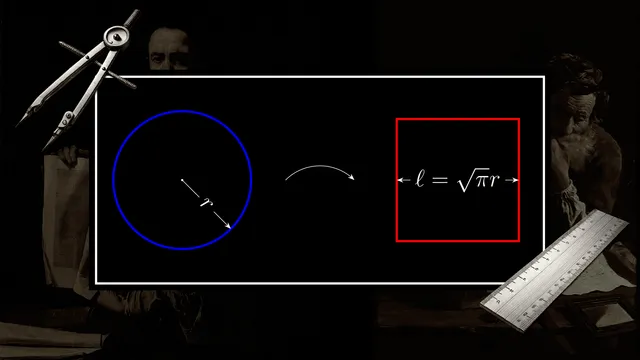
99.9…% of Geometers Cannot Solve This Problem!
A short explanation of the story behind squaring the circle: from its statement back in Ancient Greece to the proof of its impossibility by Ferdinand von Lindemann.
This was originally created as a video in Spanish, which is available at https://youtu.be/qRfVGjqlkJ8
Rank 175
but what is a spinor
spinors are the mathematical foundation of physical concepts like the quantum spin or the polarization of a light wave. they are known for being quite unintuitive, but they're quite simple really if you think of them in purely mathematical terms. spinors play a massive role in physics and math so this should be fun.
Rank 175
Implementing Automatic Differentiation in Pure Python
A recording of me explaining and implementing automatic differentiation in pure Python. I start with some mathematics of forward and reverse mode autodiff and then implement interleaved forward mode autodiff. Then I explain how to use Dual Numbers and implement forward mode autodiff using Dual Numbers. Finally, I construct a computation graph and perform a topological sort to achieve reverse mode autodiff.
Audience: Anyone with a high-school math background can keep up. All math and code has been made accessible and explained so that an undergraduate can pick it up in one viewing.
Rank 175
Drawing on the Logarithmic Scale
Using graphical programming via Blockly, the video presents high-school level math. It has an interactive notebook: https://kloimhardt.github.io/site/log.html
Rank 175
Terahertz radiation from air plasma induced by femtosecond laser pulses
This video schematically shows the technique of terahertz radiation generation in air plasma by two-color femtosecond laser pulses.
It also shows the X-wave influence on the conical terahertz radiation formation that was presented in this article: https://doi.org/10.1103/PhysRevA.105.023521
Soundtrack:
"Over Time" by Audionautix is licensed under a Creative Commons Attribution-ShareAlike License 4.0. https://creativecommons.org/licenses/by/4.0/
Artist: http://audionautix.com/
Rank 175
Clean Collatz Branches
In this video we will see what seeds put into the collatz function will take only the 3x+1 branch then only the x/2 branch before x = 1.
Rank 175
How To Integrate ANY Exponential
A fun video displaying how the patterns in the exponential function allows one to integrate exp(f(x)), without needing integrals.
Rank 175
Surds - Your High School Bully Isn't What You Think
Surds were intimidating when I was in high school, now that I understand them, they aren't so serious.
Rank 175
How to find the sine of any angle?
Hello everyone, in this video, we will derive the Maclaurin series of sin(x) with Mozart's sonata 16 in C major to give it a slightly comedic tone. This version of the video has no narration, and I would later experiment with making a video with narration, based on the response to this one.
Why don't you try the same method for another trigonometric ratio such as tan x?
Psst, thanks to the manim community for making this animation possible.
Rank 175
Plot of the Riemann Zeta function at height 7000
It shows a run of the Riemann Zeta function from height 7000, near the location of the famous Lehmer pair. Computed using Nvidia CUDA, will be used as a workshop at the Waterloo Tech Week. The speed of the video is uniform. Each square is of dimension one unit by one unit. This video is a short followup on the animated Riemann zeta videos, as none of them explore the zeta function at high heights.
The basic derivation and method of analytic continuation has been presented in a way that can be understood by an incoming mathematics or computer science freshman.
The voiceover has been provided by Denis Silin from Exodus Orbitals - I and Denis collaborated on the application.
Rank 175
Taylor Series is just replication
Intuition behind Taylor Series and it's derivation based on definition of derivative and interpretation of derivatives as "factories"
Rank 175
Why a parabola becomes a circle, different approaches.
About why a parabola becomes a circle, from different viewpoints. The problem is discussed from the algebraïc and geometry point of view.
Rank 175
angle addition theorem #SoME4
visual proof of the identities cos(a+b) = cos(a)cos(b) - sin(a)sin(b) and sin(a+b) = sin(a)cos(b) + cos(a)sin(b)
Rank 175
STRING(n) Function - A less known function in Googology
This video explains the STRING(n) function, which is a very less known function in Googology and Number theory. This function does not even have a clear name and definition, but it could be useful in mathematics
Rank 176
Muller's Blunder
Prof. Muller created a faster version of the secant method. But due to a blunder, it could have been much simpler.
Rank 177
How to beat the quadratic equation: the quadratic formula explained
Animation created using manim, demonstrating how to use the quadratic formula.
Rank 178
Vanishing And Exploding Gradients
A mathematical problem at the heart of one the most commonly used algorithm in Machine Learning, Backpropogation. A simple video made in 1 day for SoME to explain the maths behind the problem and how it's usually dealt with out in the wild.
Rank 179
Linear Algebra Explained Through Narrative Visualization
This video is a little different from the rest of the video you'll like see in this entry, instead of explainer, i did a animation storytelling video where the main character Jimmy finds the math class boring and enters the kingdom of mathematic upon falling asleep. The video is not finished yet, and a lot is to come and I will keep animating even after the challenge ends. Throughout the series I will make sure linear algebra is as intuitive as it could be possible.
Produced as part of a mathematics contest submission, this work highlights both the clarity of exposition and the innovation of presentation style.
Rank 180
What is Mathematics?
An answer to the question: What is Mathematics? That everyone can understand.
Rank 180
PCA: A Galactic Journey
An 85% visual, 15% mathematical exploration of Principal Component Analysis, where proofs, intuitive equivalences, and vivid graphics makes the ideas clear for both math enthusiasts and newcomers.
Rank 180
Mean and median
The illustration of the difference between the mean and the median using an example that shows that the mean feels what happens on the edges and the median doesn't.
Rank 180
An exploration of the Basel Problem #SoME4
Hope you enjoyed! The essay "Ways to solve and further use the Basel problem." was really useful for the making of this video. I had trouble submitting the entire video in one go, the second part is also posted on my channel.
Rank 181
Point - Straight Line - Line Segment - Half-Line (Ray) - Trigonometric Series - Part 1
line (ray) in a simplified manner, as a preparation for the upcoming episodes where we will delve into deeper and more detailed topics, ALLAH willing.
Rank 182
A deep Dive into maths most fascinating art | Pascal's Triangle and the Binomial Theorem
This video explores the wonders of the very simple pascals triangle
Rank 183
Derivation of the PDF of the Normal Distribution (Without Polar Coordinates)
A combination of methods found on YouTube and online to derive the probability density function of the Normal distribution.
Rank 183
The sin of the Devil - a weird pop-culture curiosity in Math (SoME 4)
In this video I review a weird coincidence that happened when taking the value of sin(666°).
It is fastly explained all the math concepts you need to know to understand it (square roots and the sine function), hoping every high school student could enjoy it.
The video is my attempt of a video for the SoME 2025, I hope the content balance it's low quality.
Rank 184
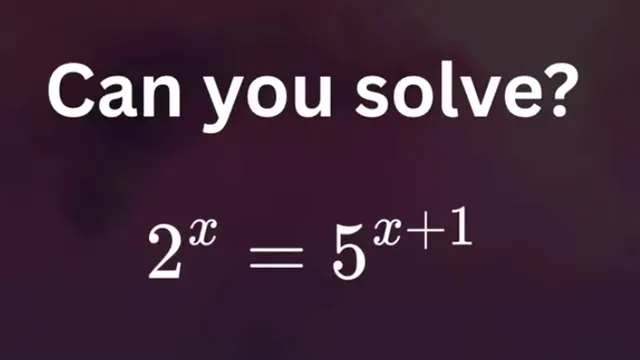
Can you solve this amazing logarithmic equation?
Can you solve this amazing logarithmic equation?
Rank 185
What is a Functor?
This YouTube short explains the very basis of a functor and what it does, especially with respect to quantum computing.
Rank 186
Helices, Rapidities, and Waves: A Journey Through Complex Motion
Linear Algebra intro